
How can democratic innovations be communicated more effectively? How can citizens’ assemblies and participatory processes generate greater public interest, stronger media coverage and lasting political impact?
We share with you an overview of three collaborative workshops bringing together journalists, researchers, communication professionals, public institutions and democratic innovators to rethink how these processes are designed and communicated.
Every year, thousands of democratic innovations take place across Europe: citizens’ assemblies, citizens’ panels, participatory budgets, citizens’ juries and other deliberative processes. While they are becoming an increasingly familiar part of democratic life, few know about them.
Many produce thoughtful recommendations and demonstrate that ordinary citizens are capable of engaging with complex public questions. However, these processes have yet to become part of the wider public conversation.
Democratic innovators, journalists, communication teams, and organisers of these processes all hold an important piece of this puzzle, and yet, they rarely have the opportunity to work on it together.
Supported by the National Lottery Fund for Democracy, managed by the King Baudouin Foundation, Smarter Together’s New Democracy Comms Unit was created to work exactly on this dilemma.
The project combines applied research, case studies, academic partnerships with Utrecht University and IHECS – Brussels School of Journalism & Communication, a multi-stakeholder brainstorming unit, and pro bono strategic communication support for democratic innovations. This combination allows ideas to be researched, developed and tested in practice.
Our objective is to understand how democratic innovations can attract greater media attention, engage wider audiences and communicate their work more effectively.
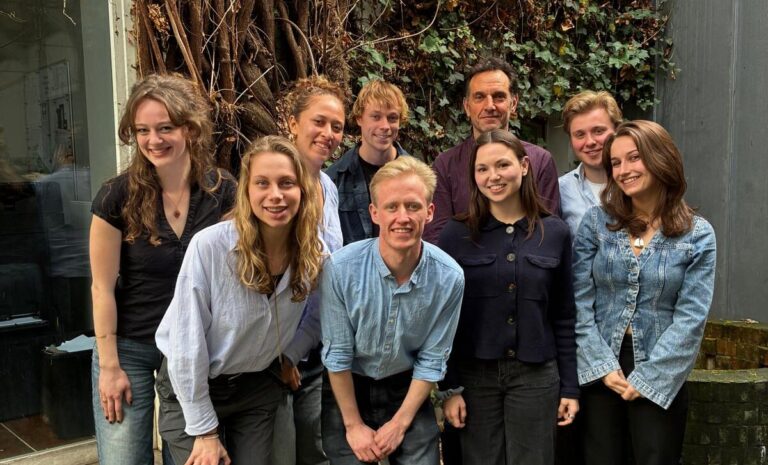
As part of this work, Smarter Together recently organised three collaborative workshops that brought together participants from public institutions, civil society organisations, academia, journalism and the democratic innovation community. Every participant looked at the same challenge through a different professional lens, creating opportunities to question established practices, introduce ideas from other fields and collectively imagine bold and creative proposals.
The workshops explored how communication could be considered from the very beginning of a democratic process, alongside its design, facilitation and political strategy.
The first workshop focused on the process design.
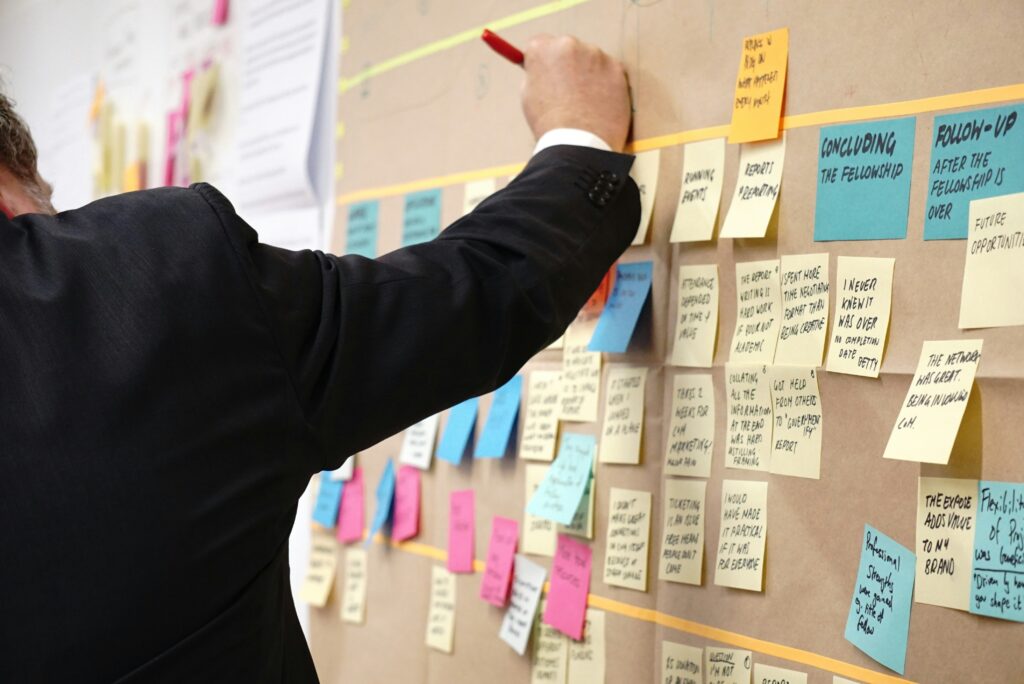
Participants worked on two fictional cases of deliberative processes and explored how their design could naturally create moments of public interest. They imagined symbolic events, artistic interventions, local activities, visual experiences and other design choices capable of generating meaningful attention throughout the life of a deliberative process.
The process design also paid special attention to the idea of political resonance.
Political resonance concerns the relationship between a democratic innovation and the political context in which it unfolds. Participants explored how the framing of the deliberative question, its connection to current public debates, the timing of the process, the commitments secured from decision-makers beforehand and the journey of recommendations after publication can increase public interest.
Once the processes had been designed, the participants of the second workshop designed communication strategies and tactics to accompany every stage of their development.
Working from the fictional cases built in the previous workshop, participants developed tactics such as participant spokespersons and media relations, local communication campaigns, influencer videos, television reportages, and other highly creative interventions capable of sustaining public attention over time.
The objective was to integrate communication strategies into the democratic processes themselves, ensuring that these are considered from the earliest stages of design.
The final workshop challenged process design proposals and communication tactics developed during the previous sessions, to preserve the highest standard and quality of deliberation.
Using Professor James Fishkin‘s principles of high-quality deliberation as an analytical framework, participants stress-tested the communication and process design choices to examine how these might affect the key conditions for good deliberation: balanced information, substantive balance, diversity of perspectives, thoughtful opinion formation and equal consideration of every participant’s voice.
Ideas evolved considerably through this exercise. Some were strengthened, others adapted and a few discarded altogether. The objective was to understand how communication and deliberation interact, ensuring that greater public visibility contributes positively to the quality of democratic processes.
In December 2026, we look forward to sharing an open-source guide and practical toolkit on communicating democratic innovations and boosting their media coverage. It will bring together everything we have learned so far through the project’s research, case studies, expert interviews and collaborative workshops into a practical resource that anyone can freely use.
If you want to know more or join our activities, contact Johanne Monfret, this project’s manager: johanne@dreamocracy.eu
open access handbook for change makers
Every 2 weeks, you’ll get: