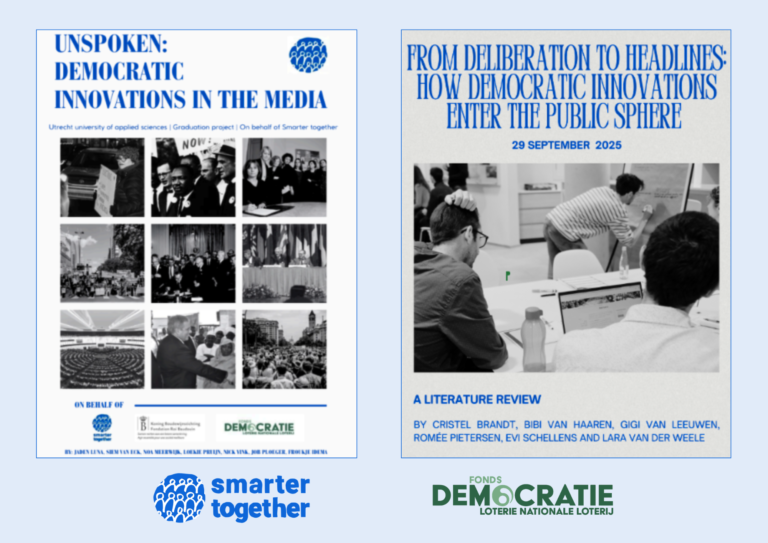
For two consecutive years, journalism students from HU University of Applied Sciences Utrecht have partnered with Smarter Together to investigate why democratic innovations (citizens’ assemblies, participatory budgets, deliberative committees, citizens’ juries,…) struggle to reach wider publics despite their growing importance across Europe.
Democratic innovations pose a particular challenge for journalism because they rarely conform to the conventions that make political news visible. Citizens’ assemblies and other deliberative processes unfold over months, through learning, discussion and gradual consensus-building rather than moments of confrontation or immediate political decisions.
The students’ research suggests that the main challenge is not media hostility, but the difficulty democratic innovations face in meeting the criteria that make political news visible. Democratic innovations compete for attention in a fast-moving news environment where editorial choices are shaped by deadlines, competing stories and the need to communicate issues clearly and quickly.
Interviews with journalists largely confirmed this picture. While many expressed genuine interest in democratic innovations, they also pointed to the practical barriers that make them difficult to cover: complex processes, limited editorial space, and the need for concrete outcomes, identifiable participants and clear narrative threads. Rather than convincing journalists that democratic innovations matter, the findings suggest that practitioners should better anticipate how journalism works and integrate communication into the design of their processes from the outset.
The practical lessons from two years of student research are consistent:
One of the most rewarding aspects of this collaboration has been the exchange itself.
The students discovered a field that receives relatively little attention in journalism programmes despite its growing importance. Smarter Together benefited from independent research, fresh perspectives and direct conversations with journalists conducted by people encountering democratic innovations for the first time.
The partnership has shown the value of bringing together democratic innovators and future journalists, two communities that share an interest in public life but do not often have opportunities to work closely together.
At a time when democratic institutions face growing pressure and public trust remains fragile in many countries, questions of visibility, understanding and participation matter more than ever.
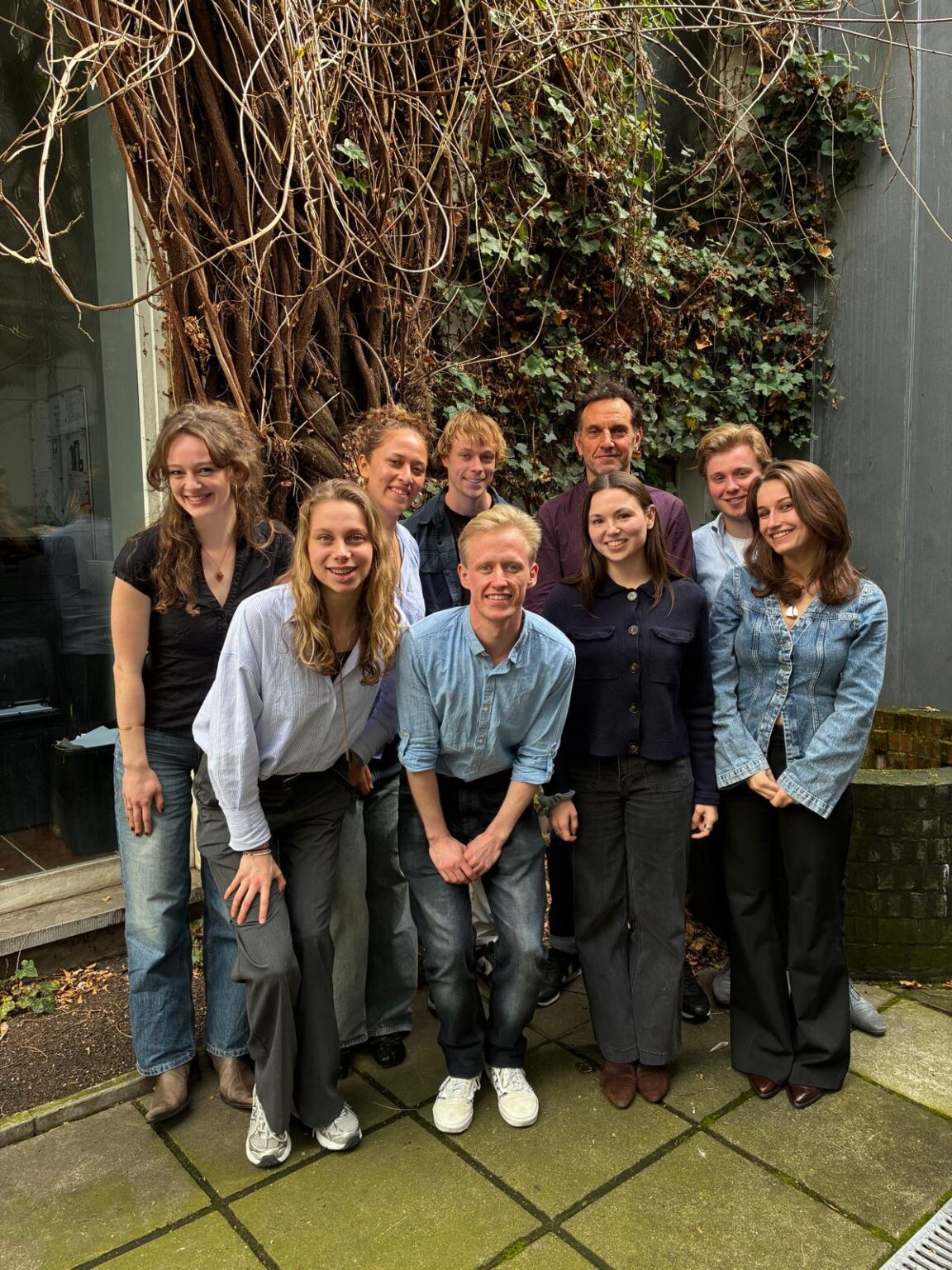
Over the past two years, this collaboration has generated research, interviews, analyses and recommendations. More importantly, it has created a dialogue between those working to strengthen democratic participation and those who will help shape how these efforts are understood by the wider public. We would like to warmly thank all participating students for their enthusiasm and thoughtful work: Cristel Brandt, Bibi van Haaren, Gigi van Leeuwen, Romée Pietersen, Evi Schellens, Lara van der Weele, Jaden Luna, Siem van Eck, Noa Meerwijk, Loekie Pruijn, Nick Vink, Job Ploeger and Froukje Idema. We look forward to continuing this collaboration with future cohorts of students!
open access handbook for change makers
Every 2 weeks, you’ll get: