Democratic innovations, such as citizens’ assemblies, participatory budgets, deliberative committees, are multiplying across Europe. Many of them go almost entirely unnoticed. Smarter Together has launched its “New Democracy Comms Unit”, a project funded by the National Lottery Fund for Democracy, managed by the King Baudouin Foundation, dedicated to closing the gap between the quality of these processes and their relative invisibility in public discourse.
Across Europe, citizens’ assemblies are producing nuanced, evidence-informed recommendations on some of the hardest questions in public life. Participatory budgets are redistributing real resources through genuine collective deliberation. Deliberative committees are doing the slow, unglamorous work of rebuilding trust between citizens and institutions. Almost none of it makes the news. When democratic innovations do appear in the press, it tends to be at launch or conclusion. This means that the deliberative process itself, the actual substance of collective intelligence at work, remains invisible.
The consequences are political. Without visibility, citizens don’t know these processes exist. Without public recognition, politicians have little incentive to invest in them. Without that investment, democratic innovations remain marginal experiments rather than structural features of how we govern.
The structural mismatch is real. Media ecosystems reward speed, conflict, emotion, and identifiable protagonists. Democratic innovations tend to be slow, collective, nuanced, and resistant to oversimplification.
Democratic innovation practitioners are technically rigorous. They know how to design a citizens’ assembly. They do not always know how to tell its story. And communication, in our field, is too often treated as an afterthought: a press release at the end, rather than something integrated into the design of democratic processes from the very beginning.
The project works on several connected fronts.
Research and expert interviews.
We conducted around 20 in-depth interviews with democratic innovation practitioners, journalists, communication professionals, and participation experts. The picture that emerged was consistent: practitioners treat communication as secondary; journalists find these processes hard to cover: too slow, too complex, lacking visual hooks or narrative tension. These interviews are feeding into a broader media analysis conducted with journalism students from HU University of Applied Sciences Utrecht, examining coverage of initiatives including the Dutch National Climate Citizens’ Assembly and participatory budgeting in Antwerp. A second collaboration with IHECS students of journalism and public relations, in Brussels, is bringing additional expertise in storytelling, framing, and audience engagement strategies.
A cross-field braintrust. At the heart of the project is a series of ideation workshops bringing together democratic innovators, communication professionals, journalists, researchers, and public institutions. These are working sessions focused on practical questions:
Live experimentation. Research and reflection are not enough. The project will strategically accompany two live democratic innovation initiatives, testing communication strategies in real conditions: framing, timing, storytelling, social media formats, press outreach, and participant engagement. The goal is to learn what actually works, where tensions emerge, and where the line lies between communicating effectively and oversimplifying in ways that compromise democratic quality.
An open-source practical guide. Everything learned from interviews, student research, workshops, and live experimentation, will feed into a open-source, field-oriented guide for practitioners: communication strategies, storytelling approaches, press kit templates, timing guides, case studies, and concrete recommendations for anyone designing their next democratic innovation with visibility built in from the start.
If you want to know more or join our activities, contact Johanne Monfret,
this project’s manager johanne@dreamocracy.eu
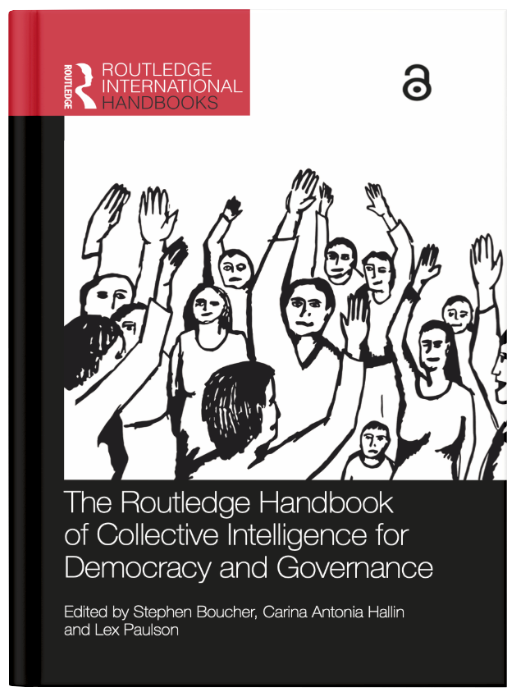
open access handbook for change makers
Every 2 weeks, you’ll get: